

UP Visayas researchers finished consumer testing in Luzon, Visayas and Mindanao of a seafood meal that needs only hot water.
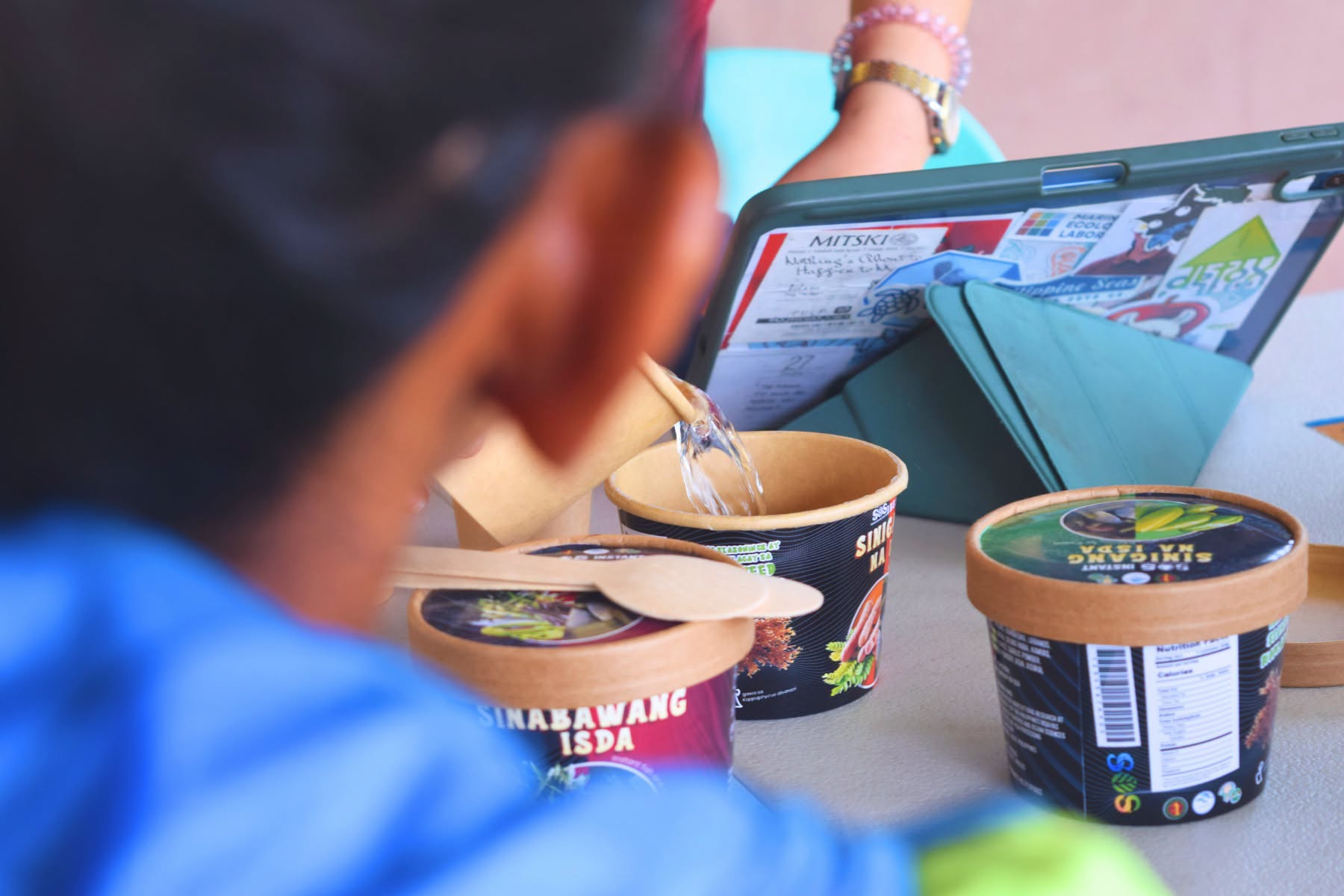
Every Filipino knows how sinigang should taste, but few have tasted one that came out of a paper cup. Peel the lid, pour hot water and wait. What fills the cup is sinigang, sour and familiar, with fish and vegetables.

Between August and October 2026, residents and local officials in Iloilo, Cagayan de Oro and Bulacan tasted it. One Bulakan official needed one word to sum it up: “patok.”
The cup is Seafood on the Spot (SOS), developed at the University of the Philippines Visayas (UPV) with funding from the Department of Agriculture – Bureau of Agricultural Research (DA-BAR). The team brought it to three communities that know emergencies firsthand: Nasidman, an island fishing village in Ajuy, Iloilo, that is cut off when the sea turns rough; Barangay Carmen in Cagayan de Oro City, a dense urban community along the Cagayan de Oro River that faces both floods and fires; and Bulakan, a coastal town on Manila Bay where typhoons, high tides and sinking land bring repeated flooding. In each, the team asked one question: would people want this in the next relief pack?
“Ang laman nya kasi puro gulay. Patok ‘to sa ating mga Pinoy,” the Bulakan official told researchers. (Its contents are all vegetables. This will be a hit with us Filipinos.)
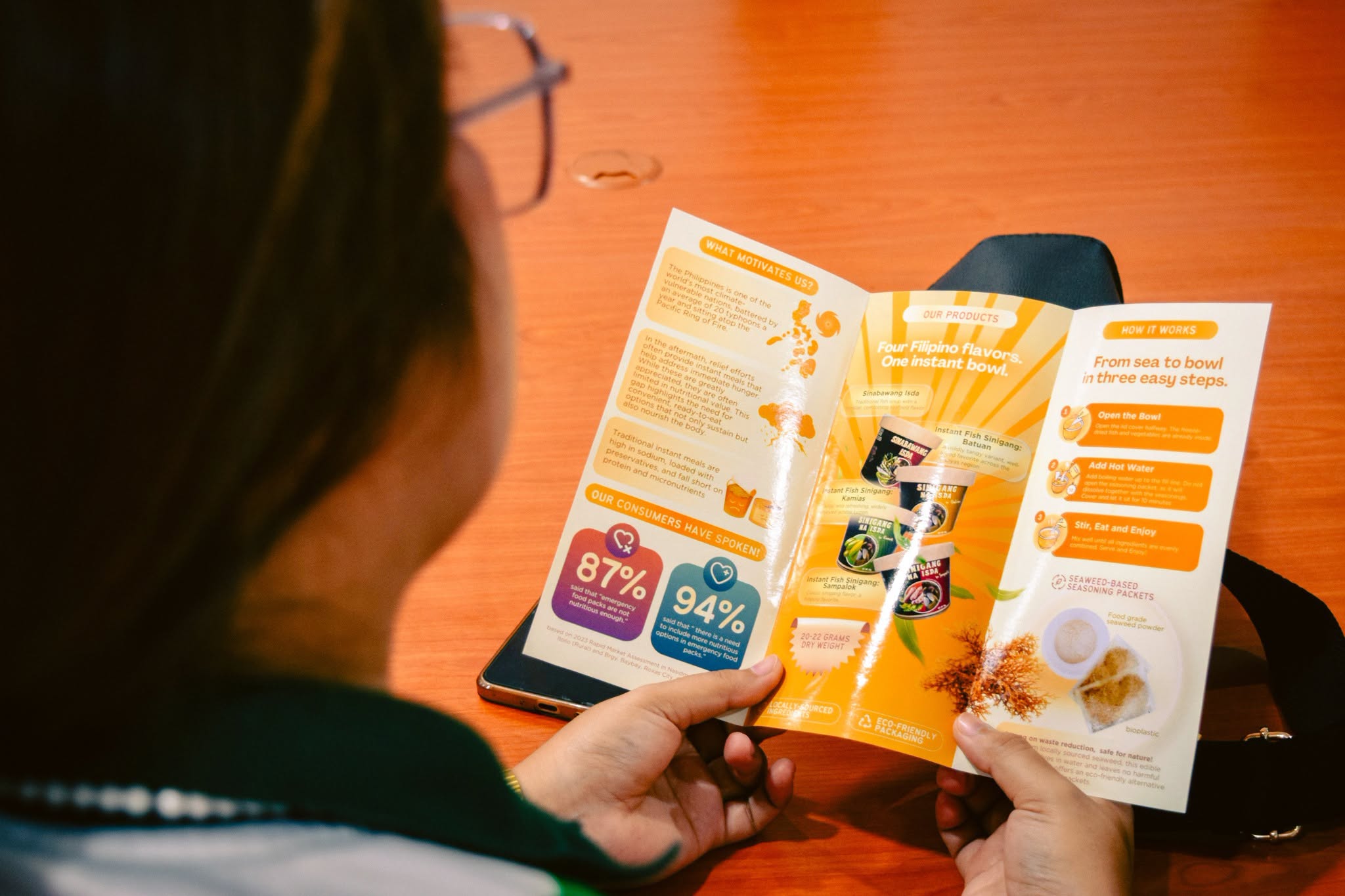
The idea pairs two things Filipinos already know. One is the convenience of instant noodles: no stove, no chopping, no pot to wash. The other is the taste of a home-cooked ulam. SOS comes as sinabawang isda and as fish sinigang soured with sampalok, batwan or kamias, the same souring agents cooks use in kitchens across the islands. The fish is underused local catch such as salay-salay (yellowstripe scad), which fisherfolk often sell for very little.
Even the seasoning packet is new. Instead of a plastic sachet, SOS seals its seasoning in a thin film made from seaweed. The film is edible and dissolves in hot water, so there is no sachet to tear open and one less piece of plastic to throw away.
For Prof. Encarnacion Emilia S. Yap of UP Visayas, Project Leader of SOS, the work starts with one question. “Para kanino ba itong ginagawa natin? Sa industriya ng pangisdaan, ginagawa natin ang mga pag-aaral na ito upang makatulong, lalo na sa maliliit na mangingisda.”. (Who are we doing this for? In the fisheries industry, we do these studies to help, especially small-scale fishers.)
The timing matters. A year ago this month, Typhoons Tino and Uwan hit back to back and affected more than 16 million people, according to the World Food Programme. The government keeps a stockpile of 3.79 million FFPs (family food packs) prepositioned in warehouses nationwide, built mostly on rice, canned goods and instant noodles. People who receive them notice. In the project’s earlier market assessment, 87.10% of respondents said current relief packs are not nutritious, and 93.55% wanted a nutritious option included. “If we give out noodles, honestly they are not nutritious; the noodles just swell,” a Bulakan official told researchers.
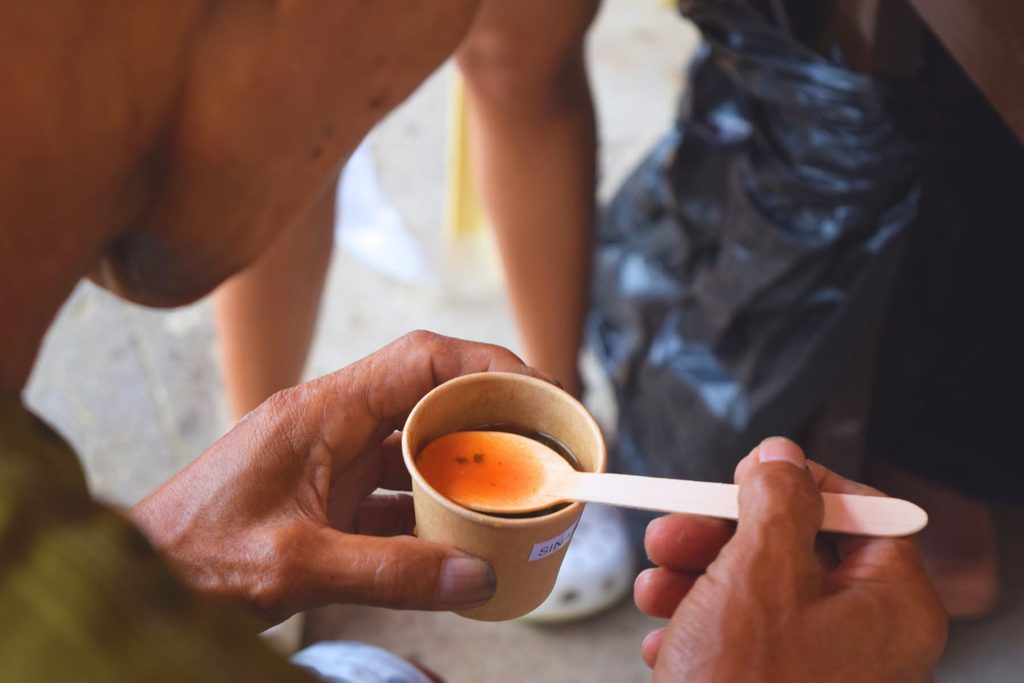
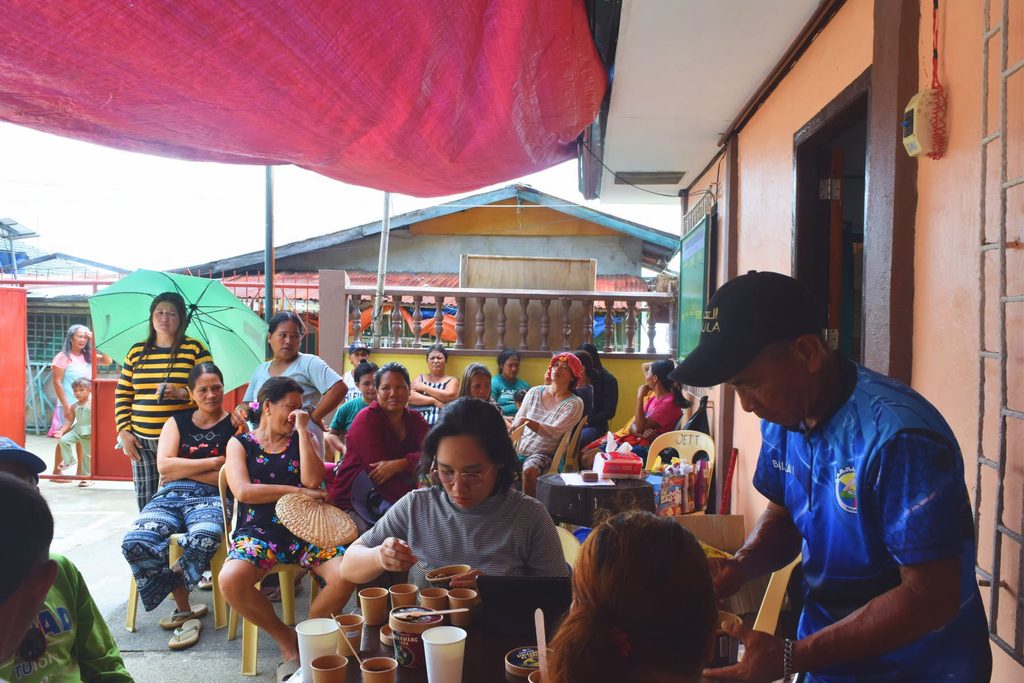
Familiar flavor came up again and again. All four Bulakan officials interviewed raised Filipino taste. Social welfare officers in Bulakan and Cagayan de Oro saw the cup as an ulam to eat with rice, one less pot to cook in a community kitchen. In an earlier round in Ajuy and Masantol, Pampanga, sinigang sa sampalok ranked first at both sites, and virtually all consumers said they liked the product.
Something new can also make people wary. “It’s scary to try sinigang that’s instant like this,” another Bulakan official said. The same official called it “a healthier option, despite the fact that it’s instant.” Tasting it helped: preliminary tally of the 2026 consumer testing, roughly 230 consumer responses across the three sites rated their chance of buying at 5 out of 5.
The team is now working on a tougher cup, a bigger serving and food safety registration. If those come through, towns could stock a relief meal that needs only hot water, tastes like home and buys fish from local fisherfolk.
For now, the recipe is the easy part. The next test is the back of an open truck in the rain.
Written by Rodmar Arduo
###
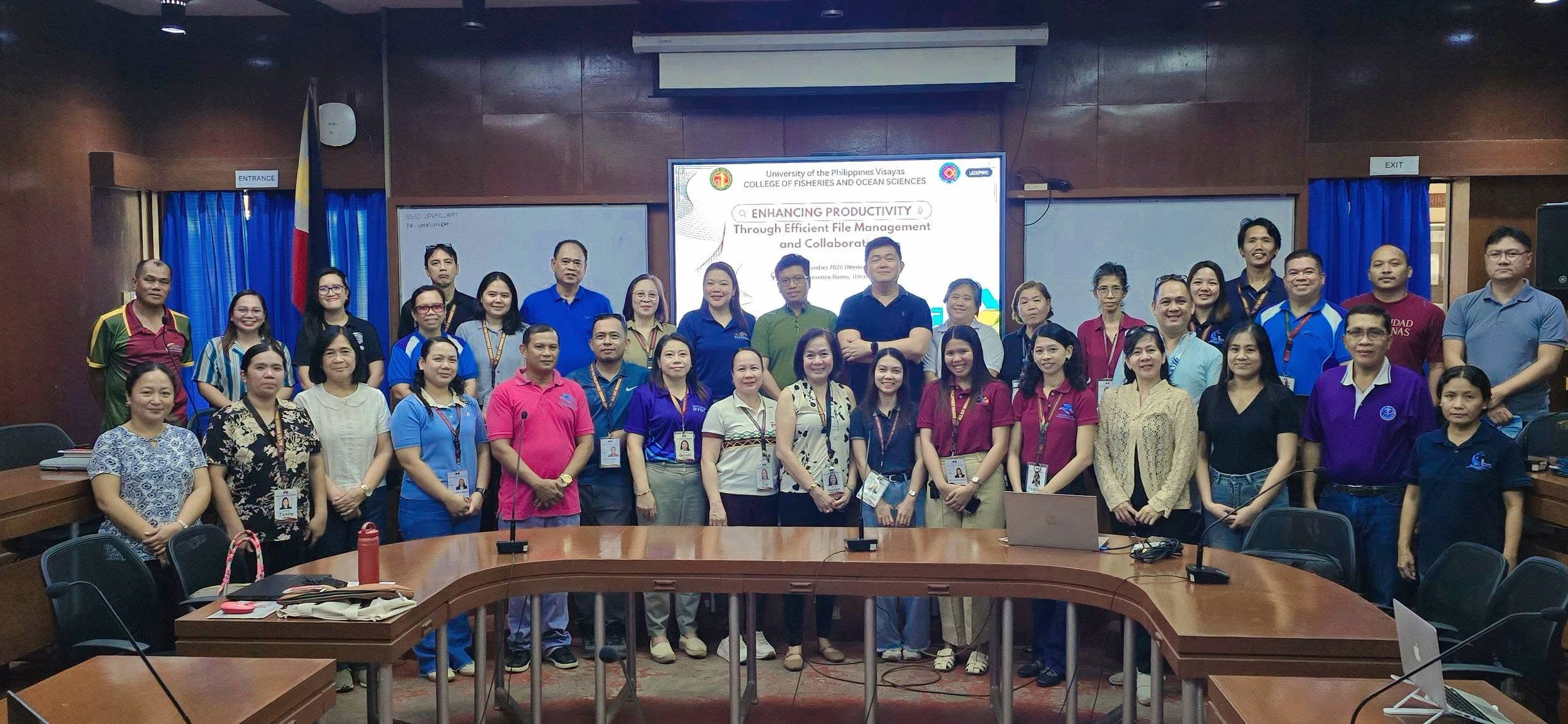
About Seafood on the Spot (SOS). SOS is a research and development project of the University of the Philippines Visayas, implemented through the Institute of Fish Processing Technology, College of Fisheries and Ocean Sciences, and funded by the Department of Agriculture – Bureau of Agricultural Research. It develops shelf-stable, just-add-hot-water seafood meals from underutilized fish, local vegetables and seaweed, in flavors drawn from Filipino home cooking, for disaster relief and everyday use. The SOS trademark is registered to UP Visayas.